1. What Is a Sewer Camera?
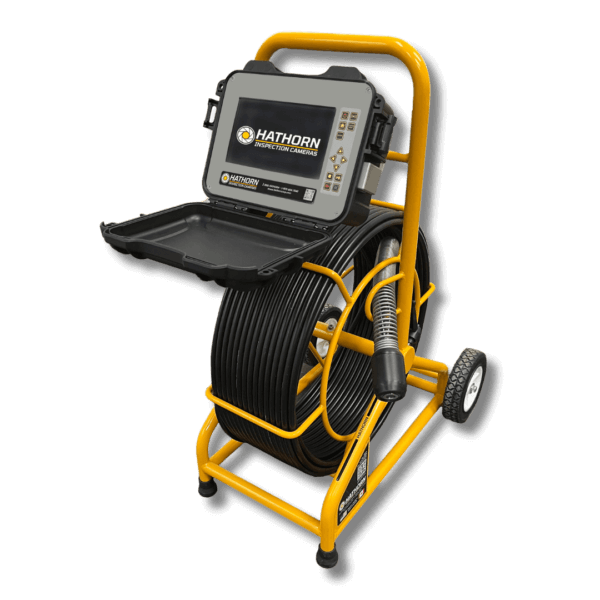
A sewer camera is a purpose-built inspection device consisting of a waterproof camera head mounted on a flexible or semi-rigid push rod or crawler system, designed to be inserted into drain and sewer pipes to provide real-time visual inspection of the pipe interior. Unlike conventional cameras, sewer cameras are engineered to withstand continuous submersion in wastewater, navigate pipe bends and junctions, transmit high-quality video images through tens or hundreds of metres of cable, and survive the mechanical stress of being pushed, pulled, and manipulated through pipe networks that are often contaminated, corroded, and structurally irregular.
The Camera Head
The camera head itself is the technical heart of a sewer inspection system and the component whose quality most directly determines the usefulness of the inspection data produced. Professional-grade camera heads use high-resolution image sensors — increasingly 4K and HD CMOS sensors in current-generation systems — housed in stainless steel or titanium enclosures with sapphire crystal or tempered glass lens protection that resists scratching from pipe debris and abrasive wastewater. The optical system is designed to provide the widest possible field of view within the pipe diameter, with pan-and-tilt capability on mainline systems allowing the operator to direct the camera view toward specific areas of interest including pipe walls, joints, laterals, and defect features.
Lighting Systems
Lighting within a sewer camera system is as important as the camera sensor itself, because the pipe interior provides no ambient illumination and the quality of the video record depends entirely on the lighting mounted on the camera head. LED lighting arrays are the current standard, providing high-intensity, even illumination of the pipe interior without the heat generation, fragility, or power consumption of older halogen lighting systems. The number, arrangement, and intensity control of the LED array on a professional camera head are specifications that directly affect the clarity of the inspection image and the ability to detect subtle defect features that a poorly lit camera would miss entirely.
Push Rod Systems
Push rod systems — where the camera head is mounted on a flexible fibreglass or steel-reinforced push rod that the operator feeds into the pipe from an access point — are the most common configuration for residential and smaller commercial drain inspection work. The push rod transmits both the mechanical force needed to advance the camera through the pipe and the electrical connections for power and video signal between the camera head and the surface control unit. Push rod systems are available in configurations suited to pipe diameters from 25mm up to 200mm or larger, with rod lengths from 20 to 120 metres or more depending on the inspection reach requirements of the application.
Crawler Systems
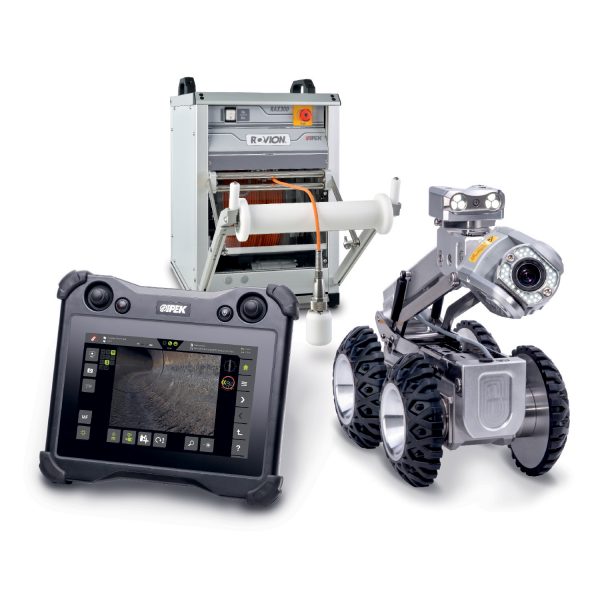
Crawler systems, which use motorised wheeled or tracked vehicles to carry the camera through larger-diameter pipes, are the technology of choice for mainline sewer inspection where pipe diameters are too large for a push rod approach and inspection distances extend beyond what manual rod pushing can achieve. A mainline crawler carries its own drive motors, pan-tilt camera head, and lighting system, controlled by the operator from the surface through a cable and control console that allows precise navigation through complex pipe networks. Crawler systems represent a significantly greater capital investment than push rod systems but deliver capabilities — long inspection distances, precise navigation in large pipes, high-quality pan-tilt video records — that are essential for municipal and infrastructure-grade inspection work.
The Surface Control Unit
The surface control unit — the monitor, recording system, and operator interface that connects to the camera via the push rod or crawler cable — is the component through which the inspection data is captured, reviewed, and reported. Professional inspection control units provide high-resolution live video display, digital recording to internal storage or removable media, distance measurement and marking capability for accurate defect location, and reporting software integration that allows the operator to generate structured inspection reports in the field. The quality and capability of the control unit determines how useful the inspection data is for the decision-making and asset management purposes it's intended to serve.
2. CCTV Inspection Systems Explained
CCTV pipe inspection systems represent a complete, integrated approach to underground pipe assessment that goes beyond the capability of a basic drain camera to deliver structured, reportable, and defensible inspection data that meets the requirements of asset management programs, engineering assessments, regulatory compliance, and infrastructure procurement processes. Understanding what distinguishes a CCTV inspection system from a simple drain camera — and why that distinction matters for professional applications — is fundamental to making the right equipment investment for your inspection work.
Structured Data Output
The defining characteristic of a CCTV inspection system is the integration of video capture, distance measurement, defect coding, and report generation into a unified workflow that produces structured inspection records rather than raw video footage. In a professional CCTV inspection workflow, the operator captures video of the pipe interior while simultaneously recording distance measurements from the access point, applying standardised defect codes to observations using an established coding system — most commonly the Water Services Association of Australia's WSA 05-2004 pipeline coding system used across Australian municipal inspection programs — and generating a structured inspection report that documents every observation with its location, classification, and severity.
This structured data output is what makes CCTV inspection information genuinely useful for asset management purposes. A raw video of a sewer main tells you that a defect exists somewhere in the footage; a structured CCTV inspection record tells you precisely where the defect is located relative to the access point, what type of defect it is according to a standardised classification, how severe it is according to a graded assessment scale, and what remediation action the severity implies. This structured, location-referenced, coded defect data is what asset managers need to prioritise maintenance, schedule rehabilitation, and justify infrastructure investment decisions.
Inspection Software
The hardware components of a CCTV inspection system — the crawler or push rod, camera head, cable drum, and surface unit — are supported by inspection software that manages the data capture workflow, defect coding process, and report generation. Professional CCTV inspection software packages provide configurable inspection templates, compliance with the relevant coding standards, GPS integration for location referencing, digital photo capture of significant defect features, and output in the data formats required by the asset management systems used by water utilities and local governments across Australia. Selecting a CCTV inspection system whose software is compatible with the reporting requirements of your customers or your own asset management systems is an important consideration in the procurement decision.
Mainline CCTV Systems
Mainline CCTV systems — designed for the inspection of gravity sewer mains and stormwater culverts in pipe diameters typically from 150mm to 1200mm or larger — are the heavy end of the CCTV inspection system spectrum. These systems use motorised crawlers with sophisticated pan-tilt camera heads, long cable drums capable of hundreds of metres of deployment, and robust surface control systems designed for operation in field conditions from remote rural infrastructure to busy urban road corridors. The capital cost of a mainline CCTV system reflects the engineering complexity and operational capability these systems must deliver, but for contractors and municipalities performing mainline pipe inspection at volume, the productivity, data quality, and reporting capability they provide justifies the investment.
Lateral Launch Systems
Lateral launch systems extend the capability of mainline CCTV crawlers by enabling the inspection of pipe laterals — the connections between the mainline sewer and individual properties — from within the mainline without requiring separate access to each lateral connection point. A lateral launch camera is deployed from the mainline crawler, inserted into the lateral opening, and pushed into the lateral pipe to inspect its condition. This capability is particularly valuable for sewer condition assessment programs where the condition of laterals is a significant component of the overall asset health picture and accessing each lateral from the property side would be prohibitively time-consuming and disruptive.
Environmental & Operational Durability
The environmental and operational durability requirements of CCTV inspection systems are demanding by the nature of their application. Systems must survive continuous immersion in aggressive wastewater environments, withstand the mechanical impact of navigating deteriorated pipe networks with rough internal surfaces and debris deposits, operate reliably in field temperatures across the full range encountered in Australian conditions from tropical far north Queensland to alpine Victorian environments, and maintain electrical safety in environments where water and electrical systems are in close proximity. Professional-grade systems meet these requirements through appropriate IP ratings, robust mechanical construction, and engineering that has been validated in real-world inspection conditions rather than laboratory testing alone.
3. Municipal Grade Systems
Municipal sewer inspection programs operate at a scale, data quality requirement, and accountability standard that demands a different level of equipment capability from the systems appropriate for residential or smaller commercial inspection work. Water corporations, local governments, and the infrastructure contractors who work on their behalf need CCTV inspection systems that can sustain high-volume daily inspection throughput, produce structured inspection data that meets asset management and regulatory reporting standards, survive the demands of constant field deployment, and deliver consistent performance across the full range of pipe sizes, conditions, and access environments represented in a municipal sewer network.
Crawler System Specification
Mainline crawler systems for municipal applications are specified around the pipe diameter ranges of the network being inspected and the productivity requirements of the inspection program. A water utility inspecting trunk sewers in diameter ranges of 300mm to 1200mm needs a different crawler specification from a local government contractor working primarily on reticulation sewers in the 150mm to 375mm range, and the cable drum capacity required for inspections of long sewer runs between access chambers differs from the requirements of more densely chambered urban networks. We work with municipal customers to specify crawler systems that match the actual inspection requirements of their programs rather than defaulting to a generic specification that may be over or under-capable for the specific network characteristics involved.
Pan-Tilt Camera Head Capability
Pan-tilt camera head capability is a non-negotiable specification for mainline municipal inspection work. The ability to rotate the camera view through 360 degrees of pan and significant tilt range — typically plus or minus 90 degrees in professional systems — allows the operator to direct the camera toward specific pipe features, inspect joint conditions around the full circumference of the pipe, examine lateral connections in detail, and characterise defect features with the precision that structured defect coding requires. A fixed-head camera in a mainline application can only record what the camera happens to be pointed at as the crawler passes — missing defect features on the upper pipe quadrant, failing to inspect lateral connections adequately, and producing inspection records that lack the completeness that asset managers require.
Distance Measurement Accuracy
Distance measurement accuracy is a critical performance parameter for municipal inspection systems because the value of defect location data in an asset management context depends on it being accurate enough to support maintenance planning and construction scoping. Professional CCTV inspection systems use calibrated encoder wheels on the crawler or push rod system to measure deployment distance with an accuracy of better than one percent across the full inspection range, providing defect location data that can be used with confidence to plan point repair, identify the position of features relative to access chambers, and correlate inspection findings with as-built records and surface features.
Reporting Software Compliance
Reporting software compliance with Australian municipal standards is an essential specification for any CCTV system supplied into municipal inspection programs. The WSA 05-2004 coding system and its associated reporting formats are the standard framework for gravity sewer inspection in Australian municipal contexts, and CCTV inspection systems whose software supports this coding structure directly — rather than requiring manual post-processing to convert generic defect notes into coded records — provide a significant productivity advantage in high-volume inspection programs. We specify and supply systems whose inspection software includes full WSA 05-2004 coding support, enabling field operators to produce compliant inspection records directly from the surface unit rather than processing raw data back in the office.
Vehicle Integration
Vehicle integration for municipal CCTV inspection programs — where the inspection equipment is mounted in a dedicated inspection vehicle rather than deployed from a trailer or portable carrying arrangement — is an important operational consideration for programs operating at significant daily inspection volumes. Vehicle-mounted systems with purpose-built equipment bays, integrated power supply from the vehicle, cable drum mounting that allows deployment directly from the vehicle without manual relocation, and operator workstations configured for comfortable sustained use represent a significant productivity and operator ergonomics improvement over more basic deployment configurations. We supply complete vehicle integration packages for municipal customers establishing or upgrading dedicated inspection vehicle assets.
Training & Competency Development
Training and competency development for municipal inspection teams is an area where our technical support capability adds real value beyond equipment supply. The quality of CCTV inspection data is fundamentally dependent on the competency of the operators who conduct the inspections — their knowledge of defect identification and coding, their camera operation technique, their understanding of the reporting software, and their ability to make sound professional judgements about defect severity in the field. We provide comprehensive operator training for all systems we supply, and we offer ongoing support for the development of inspection team competency that ensures municipal programs get the full value from their equipment investment.
4. Residential Plumbing Solutions
Residential drain and sewer inspection represents the largest volume application for sewer camera technology in Australia, and it's an application where the right equipment choice makes a direct difference to the productivity, professionalism, and profitability of a plumbing business. The plumber who can insert a camera, locate a blockage or defect precisely, show the customer a clear video of the problem, and provide a written report with a location reference for the repair has a fundamentally different customer proposition from one who quotes based on experience and estimation — and that difference translates directly into customer trust, job conversion, and the ability to charge appropriately for a professional service.
Push Rod Systems for Residential Work
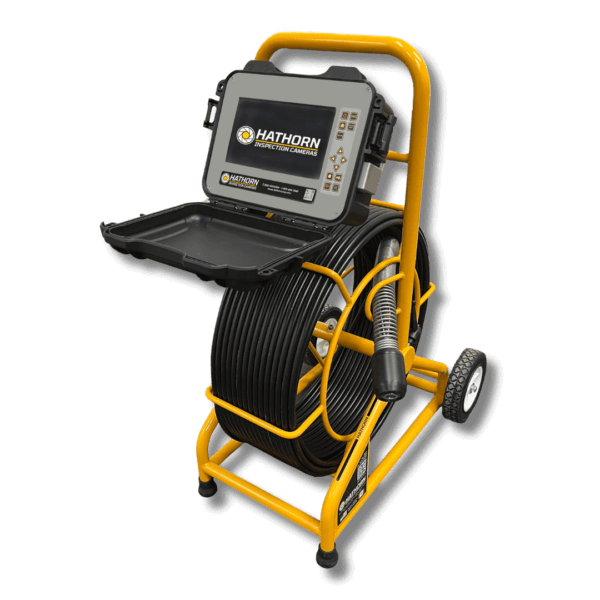
Push rod inspection systems for residential applications are available in a range of configurations suited to different pipe sizes and inspection reach requirements. The most common residential specification is a 40 to 60 metre push rod system with a 25mm to 40mm camera head suited to the 50mm to 100mm drain lines typical of residential plumbing — toilet drains, kitchen waste lines, bathroom fixtures, and the property connection drain from the house to the street sewer. This configuration covers the vast majority of residential inspection scenarios, providing the reach to inspect the full length of typical residential drain runs and the camera head diameter to navigate the bend radii and junction configurations found in residential drainage systems.
Camera Head Selection
Camera head selection for residential push rod systems involves a balance between image quality, physical dimensions, and operational durability that varies with the specific focus of the operator's work. A plumber working primarily on small-diameter residential drains needs a different camera head specification from one who regularly inspects larger building drainage systems or pre-purchase drain inspections that cover the full range of drain sizes in a residential property. We carry camera head options across the full range of residential-relevant diameters and specifications, and our technical team can advise on the configuration that best fits your specific work profile.
Portable & Lightweight Design
Portable and lightweight system design is a practical priority for residential plumbing camera systems that will be transported between multiple job sites daily, operated by a single technician without assistants, and deployed from a van or ute alongside a full complement of other plumbing equipment and materials. The best residential inspection systems are compact enough to carry easily, robust enough to handle the rough treatment of daily field use, and quick to set up and deploy so that camera inspection adds minutes to a service call rather than hours. We specify and recommend systems that have been designed with these operational realities in mind — not just technically capable in a laboratory sense, but practically suited to the day-to-day workflow of a working plumber.
Screen Quality & Image Clarity
Screen quality and image clarity on the surface control unit are more important for residential applications than they might initially appear, because the control unit screen is often the medium through which the plumber demonstrates the inspection findings to the customer. A clear, bright, high-resolution video of a cracked pipe, root intrusion, or blocked drain shown on a quality monitor creates immediate customer understanding and confidence in a way that a verbal description of findings never can. Customers who can see the problem themselves are more likely to authorise the recommended repair immediately, more likely to trust the plumber's professional judgement, and more likely to refer the business to others based on the quality of the service experience.
Reporting Capability
Reporting capability for residential inspection work has become increasingly important as customers — both private homeowners and the real estate and property management sectors — expect professional documentation of inspection findings rather than verbal reports. Modern residential inspection systems with integrated reporting software allow the plumber to generate a written inspection report with video clips and still images of significant findings, defect location references, and professional formatting that can be emailed to the customer directly from the job site. This reporting capability positions camera inspection as a premium professional service and supports the fee levels that professional equipment and expertise justify.
Pre-Purchase Property Inspections
Pre-purchase property inspections represent a growing and valuable market for residential plumbing camera operators across Australia. Prospective property buyers, conveyancers, and building inspectors increasingly recognise that the condition of underground drainage is a significant component of property condition that is impossible to assess without camera inspection, and the potential cost of discovering drain problems after settlement provides a compelling motivation to invest in pre-purchase inspection. Plumbing businesses equipped with quality camera systems and professional reporting capability are well-positioned to serve this market with a service offering that is high-value, differentiating, and relatively straightforward to deliver with the right equipment.
5. Recording & Reporting Features
The recording and reporting capability of a sewer camera system is what transforms a live visual inspection into a lasting, shareable, actionable record of pipe condition. In professional inspection contexts — whether municipal asset management, commercial property due diligence, or insurance claim support — the inspection record is often more valuable than the inspection itself, because it is the record that supports decisions, justifies expenditure, resolves disputes, and provides the audit trail that accountability requires. Understanding what distinguishes professional recording and reporting capability from basic video recording is essential for any operator investing in inspection equipment for professional applications.
Digital Video Recording
Digital video recording to internal solid-state storage and removable media is the baseline recording capability of any professional sewer inspection system. Current-generation systems record in full HD or 4K resolution to internal storage while simultaneously providing a real-time display on the operator monitor, with capacity for many hours of continuous recording before storage management is required. Removable media options — SD cards, USB drives — allow footage to be transferred to office computers for processing, archived to long-term storage, or shared with customers and stakeholders without requiring the inspection unit itself to be connected to a computer network.
Distance & Location Overlay
Distance and location overlay on recorded video is a capability that fundamentally transforms the utility of sewer inspection footage for professional applications. When every frame of recorded video carries a distance readout showing the camera's position relative to the access point — updated continuously as the camera advances through the pipe — defect features captured in the footage are permanently associated with their location data. An operator reviewing the footage six months later can state with precision that the cracked joint is located 23.4 metres from the upstream access chamber; without the distance overlay, the same defect has no location reference beyond its approximate position in the footage timeline.
GPS Coordinate Integration
GPS coordinate integration in CCTV inspection systems allows inspection records to be georeferenced — associated with specific geographic coordinates that can be mapped, integrated with GIS asset management systems, and correlated with above-ground surface features. For municipal inspection programs where inspection data feeds into spatial asset management databases, GPS integration eliminates the manual data entry and coordinate estimation that georeferencing without integrated GPS would require, improving data quality and reducing the office processing time needed to make inspection records usable in asset management systems.
Still Image Capture
Still image capture of significant defect features provides inspection records with the photographic documentation that customers, engineers, and asset managers find most immediately accessible and useful. While video footage provides the complete inspection record, a well-framed still image of a specific defect — a cracked pipe, a root intrusion, a joint offset — communicates the finding more directly and is more easily incorporated into written reports, email communications, and presentation materials than video clips. Professional inspection systems allow the operator to capture still images at any point during the inspection with a single button press, automatically associated with the current distance measurement and timestamp.
Defect Coding & Annotation
Defect coding and annotation within the inspection software allows structured defect observations to be recorded directly during the inspection rather than added during post-processing. In systems with full inspection coding software, the operator pauses at a defect feature, selects the appropriate defect code from the software interface, records severity and other classification parameters, captures a still image, and continues the inspection — with all of this structured data automatically incorporated into the inspection record that the software generates. This in-field coding workflow produces a complete, structured inspection record by the time the camera is withdrawn from the pipe, rather than requiring significant post-inspection processing time.
Reporting Output Formats
Reporting output formats that match the requirements of different customers and asset management systems are a practical consideration in professional inspection software selection. Municipal customers may require output in specific data exchange formats compatible with their GIS and asset management platforms. Commercial customers may expect PDF inspection reports with professional formatting, embedded images, and clear finding summaries. Contractors working for multiple clients may need the flexibility to produce different report formats for different customer requirements from the same inspection data. The reporting flexibility of the inspection software is an important evaluation criterion for operators whose customer base has diverse reporting requirements.
Cloud Connectivity
Cloud connectivity and remote data access capabilities are increasingly relevant features in professional inspection systems, enabling inspection data captured in the field to be synchronised automatically to cloud storage, accessed remotely by office staff or clients, and integrated with web-based asset management platforms without manual file transfer processes. For inspection contractors managing field teams across multiple sites, cloud connectivity provides real-time visibility of inspection progress and data quality that was previously only possible after the field team returned to the office at the end of the day.
6. Accessories & Upgrades
The core sewer camera system — camera head, push rod or crawler, and surface control unit — is the foundation of an inspection capability, but the accessories and upgrades available for professional systems significantly extend their versatility, productivity, and the range of inspection tasks they can address. Investing thoughtfully in accessories and upgrades alongside the core system purchase, or planning for their addition as the inspection business grows, is an important aspect of getting maximum value from a sewer camera investment.
Locating Transmitters & Surface Receivers
Locating transmitters and surface receivers allow the operator to pinpoint the exact surface location of the camera while it is inside the pipe — a capability that is essential for any application where the camera findings need to be translated into excavation locations, property boundary references, or accurate as-built position records. The locating transmitter is typically built into or attached to the camera head and broadcasts a signal that the surface receiver detects and uses to determine the camera's horizontal position and depth. Professional locating systems achieve horizontal position accuracy of better than 300mm in standard conditions, giving the operator the confidence to mark an excavation location or plot a pipe route on a site plan with genuine precision.
Skid Systems & Centraliser Attachments
Skid systems and centraliser attachments for push rod camera heads ensure that the camera travels through the pipe in a centralised, stable position that produces consistent image quality and protects the camera head from impact with the pipe wall. Skids — small wheels or runners mounted around the camera head circumference — support the head off the pipe floor, maintaining a centred position that provides a symmetrical field of view and consistent lighting of the pipe interior. Centralisers perform the same function in larger pipe diameters where a skid arrangement alone is insufficient to prevent the camera from resting on the pipe bottom. These accessories are particularly important for producing professional-quality inspection records in larger-diameter push rod applications.
Additional Cable Drum Lengths
Additional cable drum lengths allow push rod inspection systems to be extended beyond their standard configuration to address inspection tasks requiring greater reach. A system supplied with a standard 40-metre rod can often be extended to 60 or 80 metres with additional rod sections, extending its reach to cover longer residential drain runs, commercial drainage systems, and property connection drains where the connection to the public sewer is at greater distance from the access point than a standard rod length accommodates. The mechanical properties of push rod extensions — their stiffness, column strength, and push force transmission — are important technical parameters, and we specify extensions that maintain the pushability and performance of the full rod system rather than compromising inspection reach with rods that buckle or bind in longer runs.
Camera Head Upgrades
Camera head upgrades provide a path to improved image quality, greater functionality, or extended capability range for existing systems without replacing the entire system. Upgrading from a standard definition camera head to a high-definition or 4K unit, adding pan-tilt functionality to a system that originally had a fixed-head camera, or moving to a smaller-diameter head to extend the pipe size range of the system downward are all upgrade paths that we support for the systems we supply, extending the useful life of a core system investment as the operator's capability requirements evolve.
Cleaning & Inspection Combination Equipment
Cleaning and inspection combination equipment — systems that allow high-pressure water jetting for drain cleaning to be integrated with camera inspection in a single service call — significantly improves the productivity of plumbing businesses that offer both services. Pre-inspection cleaning to clear debris that would obscure defect features, post-cleaning inspection to verify the effectiveness of the cleaning and identify underlying structural defects that the blockage may have been masking, and the ability to offer a combined clean-and-inspect service as a premium offering all become more practical and efficient when cleaning and inspection equipment are operationally integrated. We can advise on equipment configurations that support effective integration of cleaning and inspection workflows.
Carrying Cases & Transport Solutions
Carrying cases, transport systems, and vehicle storage solutions for sewer camera equipment protect the investment in professional inspection equipment from the mechanical damage and environmental exposure of daily field transport, while making the equipment faster to deploy and easier to manage at the job site. Hard cases with custom-cut foam inserts for camera heads and accessories, drum trolleys for larger push rod systems, and purpose-designed vehicle storage racking for van and ute installations all contribute to the efficient, professional operation of a camera inspection service and the longevity of the equipment through proper storage and transport handling.
7. National Supply & Support
Australia's geography presents supply and support challenges for specialist equipment that suppliers without genuine national capability cannot adequately address. A plumbing contractor in the Pilbara, a water utility in regional Queensland, a municipal inspection contractor in suburban Adelaide, and a residential plumber in inner Melbourne all have legitimate needs for professional sewer camera equipment — and all of them need to know that when they invest in inspection equipment, they can access the technical support, parts supply, and service capability needed to keep that equipment operational regardless of where they work.
National Supply Network
Our national supply network covers metropolitan and regional Australia through a combination of direct supply, established freight partnerships, and regional service relationships that ensure equipment can be delivered and supported efficiently across the country. For standard in-stock items, we target delivery to most metropolitan and major regional centres within two to three business days, with expedited freight options available for urgent requirements. For larger systems requiring specialist freight handling — crawler systems, vehicle-mounted equipment, complete inspection packages — we manage the logistics directly to ensure equipment arrives in perfect condition regardless of destination.
Technical Support
Technical support from qualified application engineers is available to all customers regardless of their location through phone, email, and remote access support channels that allow our team to provide genuine technical guidance rather than generic customer service responses. Our application engineers have direct experience with the inspection systems we supply and the applications they're used for, meaning the technical advice they provide is grounded in practical knowledge of how the equipment performs in the field conditions that Australian operators encounter. When a technical issue arises on a job site, you need to reach someone who understands both the equipment and the application — not a call centre reading from a script.
Spare Parts Availability
Spare parts availability for the systems we supply is maintained with the depth and range needed to minimise the downtime that equipment failures cause in active inspection operations. Camera heads, push rods, cable assemblies, monitor components, battery systems, and the consumable elements of inspection equipment — seals, connectors, wear items — are stocked to support the operational continuity of our customer base. Emergency spare parts dispatch for critical components is available for situations where a field failure is preventing an active inspection program from proceeding, with same-day or next-day freight for stocked items to most Australian locations.
Calibration & Service Support
Calibration and service support ensures that inspection systems remain in accurate, reliable, and compliant operating condition across their service life. Distance measurement calibration, camera head performance verification, and electrical safety testing are among the periodic service requirements that professional inspection systems need to meet the data quality and safety standards that professional inspection programs demand. Our service capability covers the systems we supply, and we can advise on service intervals, calibration procedures, and the indicators of performance degradation that should prompt a service assessment.
Training Programs
Training programs for operators at all experience levels — from new entrants to the inspection industry to experienced operators transitioning to new equipment platforms — are delivered in person at customer sites, at our training facilities, or remotely through digital training resources that support flexible learning for operators across the country. Equipment-specific training covering system operation, inspection technique, defect identification, coding procedures, and reporting software is supplemented by application-specific training modules covering the particular requirements of municipal inspection, residential plumbing applications, commercial property inspection, and infrastructure condition assessment. Operator competency is the most important determinant of inspection data quality, and training investment pays back directly in the quality of the inspection work the equipment produces.
Long-Term Customer Partnerships
Long-term customer partnerships characterise the way we work with the contractors, utilities, and businesses that make up our Australian customer base. We understand that sewer camera equipment is a significant capital investment that our customers rely on for their daily operational capability and their professional reputation, and we take the responsibility of being a long-term supply and support partner seriously. That means being available when problems arise, being honest about the capabilities and limitations of the equipment we recommend, staying current with the technology developments that will improve our customers' inspection capability, and investing in the relationship quality that makes working with us genuinely easier and more valuable than the alternatives.