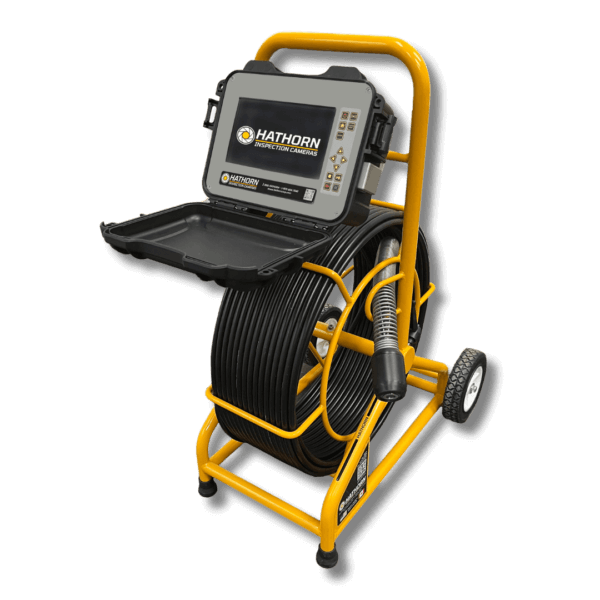
1. What Is a Push Camera?
A push camera — also known as a push rod camera, drain inspection camera, or pipeline camera — is a flexible, cable-mounted inspection system consisting of a waterproof camera head attached to a semi-rigid fibreglass or stainless steel push rod that is manually fed into a pipe from an access point. As the rod is pushed through the pipe, the camera transmits live video footage to a handheld or portable monitor, allowing the operator to see exactly what is happening inside the pipe in real time without any need to excavate, disrupt surfaces, or estimate conditions from external observations.
Camera Head & Imaging
The camera head at the front of a push rod system houses a miniaturised camera sensor — typically a CMOS or CCD imaging chip — along with a ring of LED lights that illuminate the interior of the pipe as the camera advances. The quality of the imaging sensor and the LED array are two of the most important specifications in a push camera system, as they directly determine the clarity, colour accuracy, and low-light performance of the footage captured during inspection. High-quality systems produce sharp, bright, well-resolved images even in the darkest and most contaminated pipe environments.
The Push Rod
The push rod itself is engineered to transmit the manual pushing force from the operator's hands at the access point to the camera head potentially tens of metres away through bends, junctions, and changes in pipe direction. Good push rod design balances flexibility — the ability to navigate bends without kinking — with enough column strength to push the camera through debris and light blockages without the rod buckling or collapsing. Most professional push rod systems use a fibreglass core with a protective outer jacket that provides both flexibility and durability across thousands of inspection cycles.
Monitor & Recording Unit
The monitor or recording unit in a push camera system displays the live video feed from the camera head, typically alongside overlay information including the distance the camera has travelled into the pipe, a clock and date stamp for inspection recording, and in some systems, an audio channel for operator voice notes. Modern push camera monitors range from basic fixed-mount LCD screens to rugged, sunlight-readable touchscreen units with built-in SD card recording, USB output, and Wi-Fi connectivity for direct footage transfer to a laptop or mobile device on site.
Locating Transmitters (Sondes)
Locating transmitters — sometimes called sondes — are a common accessory integrated into or paired with push camera systems to allow the above-ground location of the camera head within the pipe. A sonde transmits a radio frequency signal that is detectable by a compatible surface locator, allowing the operator to pinpoint the exact position of the camera when a defect, blockage, or point of interest is identified. This above-ground location capability is essential for planning excavation, understanding pipe routing, and producing accurate drainage plans from inspection results.
Push Cameras vs Robotic Systems
Push cameras differ fundamentally from robotic or crawler-based inspection systems in their operating principle and their practical application envelope. Where robotic systems use motorised wheels or tracks to drive themselves through larger-diameter pipes under power, push cameras rely entirely on manual rod advancement and are therefore limited in the distance they can practically travel and the pipe diameters they can access. This distinction defines the application space of push cameras clearly — they are the right tool for smaller diameter pipes, shorter inspection runs, and applications where portability and ease of setup outweigh the need for long-distance autonomous travel.
The simplicity of the push camera operating principle is one of its greatest practical strengths. A skilled operator can set up a push camera system, complete an inspection of a standard residential drain, produce a recorded report, and move to the next job in a fraction of the time required by more complex robotic systems. This operational efficiency, combined with the relatively modest capital cost of push camera equipment compared to crawler systems, makes push cameras the dominant inspection technology for the high-volume, shorter-run inspection work that constitutes the majority of professional drainage inspection activity in Australia.

2. Applications in Plumbing & Drainage
Blocked drain diagnosis is the single most common application for push cameras in Australian plumbing and drainage work, and it is the use case that most clearly demonstrates the technology's practical value. Rather than progressing through a sequence of rodding, jetting, and chemical treatment attempts with uncertain results, a push camera allows the plumber to see the nature and location of the blockage directly — whether it is a root intrusion, a build-up of grease and debris, a collapsed pipe section, a displaced joint, or a foreign object — and select the most appropriate remediation method with confidence from the outset.
Pre-Purchase Drainage Inspections
Pre-purchase drainage inspections have become an increasingly standard part of property transactions in Australia, particularly for older properties where the condition of below-ground drainage infrastructure is unknown and potentially significant. A push camera inspection of the property's drainage system before purchase gives buyers an independent, visual record of pipe condition — identifying cracks, root intrusions, joint displacements, or deteriorating materials that would otherwise only become apparent after settlement when rectification costs fall entirely to the new owner. SECA supplies push camera systems to many property inspection professionals who have built this service into their standard inspection offering.
Post-Blockage Verification
Post-blockage verification is a professionally responsible step that distinguishes quality drainage contractors from those who simply clear a blockage and move on. After a blocked drain has been cleared by rodding or high-pressure jetting, a push camera inspection confirms that the blockage has been fully removed, that no pipe damage has occurred during the clearing process, and that there is no underlying structural defect that will cause a recurrence of the blockage in the near future. This verification step protects both the contractor and the client and provides documentary evidence of the pipe condition at the time of service.
New Construction Drainage Verification
New construction drainage verification is a growing application for push cameras as builders, certifiers, and plumbing inspectors increasingly require visual evidence that newly installed drainage systems are correctly laid, properly jointed, and free from construction debris before they are concealed under concrete slabs and finished surfaces. A push camera inspection of newly installed drains at the practical completion stage of construction provides a documented baseline of pipe condition that protects all parties — builder, plumber, and owner — from future disputes about pre-existing defects.
Stormwater System Inspection
Stormwater system inspection and maintenance planning is an important application for push cameras in both residential and commercial settings. Stormwater drains accumulate silt, leaf litter, root intrusions, and debris over time, and their condition is rarely assessed until a blockage or overflow event occurs. Regular push camera inspection of stormwater systems allows maintenance to be planned proactively based on actual pipe condition rather than on a fixed time schedule, directing cleaning and repair resources to the parts of the system that actually need attention rather than applying uniform treatment across the entire network.
Council & Municipal Drainage Maintenance
Council and municipal drainage maintenance teams across Australia use push cameras as a standard tool for the routine inspection and condition assessment of reticulated drainage networks. While larger-diameter municipal mains may be assessed using robotic crawler systems with more sophisticated sonar or laser profiling capabilities, the smaller-diameter lateral connections, service pipes, and smaller reticulated drains that make up the majority of any drainage network are well within the operational envelope of push camera systems. SECA supplies push camera equipment to numerous local government drainage teams and can configure systems to meet specific council reporting and data management requirements.
Insurance Investigation & Damage Documentation
Insurance investigation and damage documentation is an application where the video recording capability of push cameras provides particularly valuable evidence. When a property owner or insurer needs to establish the cause and extent of drainage-related damage — pipe collapse, subsidence, tree root intrusion, or illegal connection — a push camera inspection produces an objective visual record that can be referenced in insurance claims, dispute resolution, and legal proceedings. The date and distance stamps recorded on professional push camera footage provide the documentary integrity that these applications require.
3. Small Diameter Pipe Inspection
Small diameter pipe inspection — accessing and imaging pipes in the 32mm to 100mm diameter range — represents one of the most technically demanding and practically important capabilities of the push camera category. These are the pipes that make up the vast majority of residential and light commercial drainage infrastructure: the 50mm waste pipes under kitchen sinks and laundries, the 65mm and 80mm branch drains serving bathrooms and ensuite groups, the 100mm main sewer laterals connecting properties to the public sewer, and the 40mm and 50mm overflow relief gully lines that protect homes from sewer surcharge.
Camera Head Miniaturisation
Camera head miniaturisation is the enabling technology for small diameter pipe inspection, requiring imaging sensors, LED illumination arrays, and protective housings to be packaged within diameters small enough to travel freely through the pipe while remaining large enough to produce useful image quality. SECA supplies push camera systems with camera heads ranging from 22mm diameter for the smallest accessible waste pipes up to 75mm and beyond for larger drain sizes, with each camera head designed to deliver optimised imaging performance within its target pipe diameter range.
Access Constraints
Accessing small diameter pipes requires careful attention to the physical setup of the inspection, because the access points available for small pipes — P-traps, floor gullies, inspection openings, and cleanout points — are often awkwardly positioned and may require the rod to navigate immediate bends before reaching the pipe section of interest. Experienced push camera operators understand how to manage these access constraints effectively, and SECA's technical team can advise on camera head and rod specifications that maximise the ability to navigate the specific access geometry of your most common inspection scenarios.
Root Intrusion Detection
Root intrusion is a particularly significant issue in small diameter pipes, where even modest root growth creates a proportionally larger obstruction than in larger pipes and significantly reduces flow capacity before the pipe is completely blocked. Push camera inspection of small diameter pipes in properties with established trees or large shrubs in proximity to drain lines provides the visual evidence needed to identify root intrusion early, before it progresses to complete blockage or pipe damage, and to plan root cutting and pipe repair work with precise knowledge of the location and extent of the intrusion.
Pipe Material Identification
Pipe material identification from push camera footage is an important capability for drainage professionals assessing older pipe systems where the material of existing pipes may be unknown. Different pipe materials — clay, cast iron, PVC, concrete, and asbestos cement — have distinct visual appearances under camera illumination, and experienced operators can typically identify the pipe material from camera footage, which is important information for selecting appropriate repair methods, assessing the remaining service life of the pipe, and identifying materials that require special handling during maintenance or repair work.
Joint Condition Assessment
Joint condition assessment in small diameter pipes is a critical capability of push camera inspection for identifying the early-stage deterioration that, if left unaddressed, progresses to complete pipe failure and potentially significant property damage from drain leakage. Camera footage showing open joints, offset joints, cracked joints, or joint material degradation provides the specific, location-referenced evidence needed to plan and scope targeted repair work — either trenchless repair using CIPP lining or patch lining methods, or excavation and joint repair where trenchless methods are not applicable.
SECA's small diameter push camera range includes systems specifically engineered for the access constraints, rod flexibility requirements, and camera head dimensions of 32mm to 100mm pipe inspection work. We stock camera heads, rods, monitors, and accessories optimised for this diameter range and can configure complete systems suited to the specific mix of small diameter pipe work in your operational environment. Our technical team is available to discuss the specific pipe sizes, access configurations, and inspection requirements of your work and recommend the camera system that will perform best in your applications.
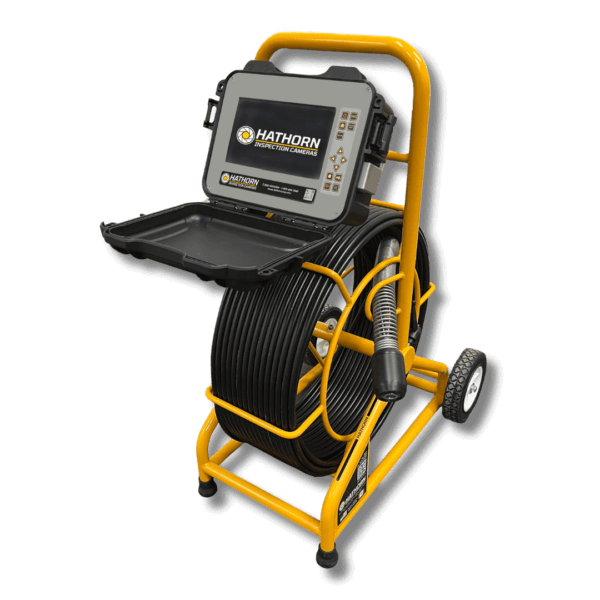
4. Benefits of Push Cameras
Rapid deployment is one of the most immediately practical benefits of push camera systems compared to all alternative pipe inspection approaches. A push camera can be taken from its carrying case, connected, and have its camera head in a drain within minutes of arriving at a job — there is no complex setup, no calibration procedure, no requirement for a large vehicle or a second operator, and no need to clear a large work area around the access point. This speed of deployment means that a push camera inspection adds minimal time to a service call and delivers its diagnostic value almost immediately after the decision to use it is made.
Non-Destructive Investigation
Non-destructive investigation is the benefit that most directly translates into value for property owners and infrastructure managers who would otherwise face exploratory excavation to investigate suspected pipe problems. A push camera inspection provides definitive visual information about pipe condition, blockage location, and defect type without disturbing any surface, structure, or landscaping above the pipe. The cost of a push camera inspection is a fraction of the cost of even a small exploratory excavation, and the information it provides is typically more precise and more complete than excavation delivers in all but the most directly exposed pipe sections.
Video Documentation
Video documentation produced by push camera inspections creates a permanent, objective record of pipe condition at the time of inspection that serves multiple practical purposes throughout the life of a drainage asset. Inspection footage documents the condition of a pipe before and after maintenance work, provides evidence for insurance claims and property transactions, establishes a baseline against which future condition assessments can be compared, and demonstrates due diligence in the management of drainage infrastructure. The date and distance stamp on recorded footage gives it the documentary integrity that makes it useful not just as an operational record but as formal evidence when required.
Accuracy of Diagnosis
Accuracy of diagnosis from direct visual inspection eliminates the uncertainty and the risk of misdiagnosis that characterises all indirect pipe assessment methods. When a push camera shows a specific root intrusion at 14.3 metres from the inspection point, that is a precise, actionable finding — not an estimate based on flow characteristics, pressure testing results, or sound transmission measurements. This diagnostic accuracy means that remediation work is planned and executed with precision, avoiding the wasted cost and disruption of clearing blockages that are not there, excavating at the wrong location, or applying repair methods unsuited to the actual defect type.
Cost Efficiency
Cost efficiency over the operational life of a drainage maintenance programme is a well-documented benefit of push camera inspection capability. Organisations that use push cameras to direct their maintenance and repair spending — targeting resources at pipes with identified defects rather than applying uniform treatment across entire systems — consistently achieve lower maintenance costs than those using time-based or reactive maintenance approaches. The capital cost of a push camera system is typically recovered within months of deployment through the efficiency gains it enables in maintenance planning and remediation targeting.
Portability
Portability of push camera systems — particularly the compact, self-contained systems SECA supplies for single-operator use — makes them practical for the full range of environments and access situations encountered in professional plumbing and drainage work. Push camera systems can be carried into roof spaces, under suspended floors, into tight plant rooms, and down access shafts where larger inspection equipment cannot practically operate. This portability ensures that the inspection capability is available wherever it is needed, not just in locations that are accessible to a service vehicle with large equipment.
Versatility
Versatility across pipe materials, pipe conditions, and inspection objectives makes a push camera system a genuinely multipurpose tool in a plumber's or drainage contractor's equipment inventory. The same camera system that inspects a blocked residential drain in the morning can document the condition of a commercial property's stormwater system in the afternoon, verify the installation quality of a new drainage system at a construction site in the evening, and produce insurance documentation footage for a property damage investigation the following day. This versatility across application types multiplies the return on the equipment investment across every working day it is deployed.
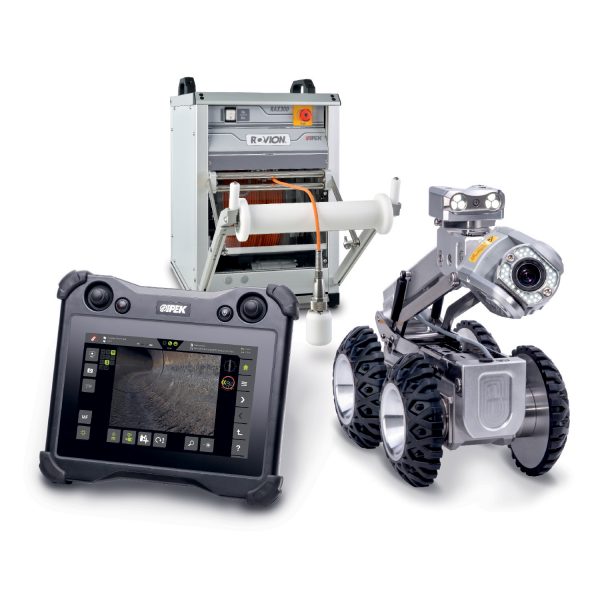
5. Comparing Push Cameras vs Robotic Systems
The fundamental operational difference between push cameras and robotic crawler systems is the mechanism by which the camera is advanced through the pipe — manual rod pushing in the case of push cameras, and motorised wheel or track drive in the case of robotic crawlers. This mechanical difference has cascading implications for the diameter range each technology addresses, the distance each can practically travel, the operational complexity of each system, and the capital investment each requires. Understanding these differences clearly is essential for making the right equipment choice for your inspection application.
Pipe Diameter
Pipe diameter is the most definitive factor separating the practical application domains of push cameras and robotic systems. Push cameras are engineered for the 32mm to 200mm diameter range that encompasses the vast majority of residential and light commercial drainage pipes. Robotic crawler systems are designed for the larger-diameter pipes — typically 150mm and above, with most systems optimised for 225mm to 1,500mm and beyond — that constitute municipal sewer mains, stormwater trunks, and larger commercial drainage infrastructure. The diameter ranges of the two technologies overlap in the 150mm to 200mm zone, where either technology may be appropriate depending on the specific inspection requirements and available access.
Inspection Distance
Inspection distance capability favours robotic systems significantly over push cameras for long-run inspections. The mechanical column strength of a push rod limits practical inspection distances to approximately 60 to 100 metres for most systems, with shorter effective ranges in pipes with multiple bends or significant debris loads. Robotic crawlers, driving themselves under power rather than being pushed, can travel hundreds of metres from a single access point in favourable conditions, making them the only practical choice for inspecting long pipe runs between manholes or access points that are beyond the reach of a push rod system.
Operational Simplicity
Operational simplicity is a significant advantage of push cameras over robotic systems, and it is one of the primary reasons push cameras remain the dominant technology for the high-volume, shorter-run inspection work that constitutes most of the Australian drainage inspection market. A single operator can set up, operate, and pack up a push camera system in a fraction of the time required for a robotic crawler, with no requirement for specialist training beyond familiarisation with the specific system. Robotic crawler systems require more complex setup, more experienced operators, and in many cases a larger crew to manage the system effectively in the field.
Capital Cost
Capital cost differences between push cameras and robotic crawler systems are substantial and reflect the significant differences in mechanical complexity, engineering precision, and operational capability between the two technologies. Entry-level professional push camera systems suitable for residential and light commercial drain inspection are available from SECA from a few thousand dollars, while mid-range systems with full recording capability, sonde transmitters, and comprehensive accessories represent a moderate five-figure investment. Robotic crawler systems for municipal-grade pipeline inspection represent a significantly higher capital commitment — often by an order of magnitude or more — that is appropriate for organisations with the inspection volume and pipe diameter requirements to justify it.
Image Quality & Data Richness
Image quality and inspection data richness increasingly favour robotic systems over push cameras at the upper end of each technology's capability range, but this distinction is less pronounced for standard diagnostic work than is sometimes assumed. High-quality push camera systems produce clear, well-lit, accurately colour-rendered footage that is entirely adequate for defect identification, condition assessment, and documentation in the diameter range they address. Where robotic systems deliver meaningful advantages in data richness is in the optional sonar profiling, laser measurement, and pan-and-tilt camera capabilities that some crawler platforms offer — capabilities that go beyond the standard visual inspection function that push cameras deliver very well.
Choosing the Right Technology
The right choice between push cameras and robotic systems for a given organisation or project is ultimately determined by the pipe diameter range, inspection distance requirements, operational environment, budget, and required data output of the inspection programme. For the majority of Australian plumbing and drainage contractors, push cameras address the bulk of their inspection workload with precision and economy. Organisations with significant municipal or large-diameter commercial inspection requirements may need robotic capability alongside their push camera systems to address the full range of their pipeline asset base. SECA's technical team can help you assess your specific inspection requirements and determine which technology — or combination of technologies — is the right fit.
Hybrid Approaches
Hybrid approaches — using push cameras for smaller diameter and shorter-run inspections and engaging specialist robotic inspection contractors for larger diameter or long-run work — are common and practical for many organisations. Owning your own push camera capability for the high-frequency, shorter-run inspection work that is part of everyday drainage maintenance, while accessing robotic inspection services on a project basis for larger infrastructure assessments, delivers the benefits of in-house inspection capability without the capital commitment of a robotic system that would be underutilised relative to its cost.

6. Industries We Supply
The plumbing and drainage industry is the largest and most diverse market SECA serves with push camera equipment, encompassing sole-trader residential plumbers, multi-trade building services contractors, specialist drainage contractors, and large plumbing organisations with fleets of service vehicles across multiple states. Push cameras have become standard equipment for professional plumbers across Australia, and SECA has supplied systems to thousands of plumbing businesses of every scale across the country. We understand the specific inspection needs, budget considerations, and equipment durability requirements of professional plumbing work, and our push camera range reflects that understanding.
Local Government & Council Infrastructure
Local government and council infrastructure teams are significant users of push camera equipment for the inspection and condition assessment of municipal drainage networks, stormwater systems, and public amenity plumbing infrastructure. SECA supplies push camera systems to council maintenance teams across Australia, and we have experience configuring systems to meet specific council reporting requirements, asset management data formats, and procurement compliance frameworks. Our national supply capability and consistent product availability are particularly valued by government clients managing multi-site inspection programmes across large geographic areas.
Building & Construction
Building and construction is a growing market for push camera equipment as quality-focused builders, certifying plumbers, and construction inspectors incorporate drainage inspection into their standard pre-completion and handover processes. Pre-slab and pre-backfill drainage inspections using push cameras are becoming more common as builders recognise the liability protection that documented pre-completion inspection provides and as certifiers and hydraulic consultants increasingly require inspection evidence as part of their compliance documentation. SECA supplies construction-sector clients with robust, field-ready push camera systems suited to the demanding conditions of active construction sites.
Property Inspection & Building Consultancy
Property inspection and building consultancy is an application where push cameras are increasingly integrated into the standard suite of inspection services offered to property buyers, vendors, and investors. A pre-purchase drainage inspection using a push camera provides property transaction stakeholders with objective, documented evidence of sewer and stormwater system condition — intelligence that can influence purchase price negotiations, identify pre-settlement repair obligations, or provide the basis for post-settlement warranty claims where drainage defects were not disclosed. SECA works with property inspection businesses to specify push camera systems that integrate effectively with their reporting workflows and deliver the footage quality their clients expect.
Industrial Facilities & Manufacturing
Industrial facilities and manufacturing plants with significant process drainage infrastructure use push cameras for routine condition monitoring of production floor drains, trade waste lines, process water drains, and stormwater systems that handle industrial runoff. In these environments, pipe condition monitoring is not simply a maintenance activity — it is a compliance obligation under trade waste agreements and environmental licences that require organisations to demonstrate that their drainage infrastructure is in good condition and not contributing to groundwater or stormwater contamination. SECA supplies industrial facilities clients with push camera systems appropriate to the pipe diameters and inspection requirements of industrial drainage networks.
Real Estate & Strata Management
Real estate and strata management organisations with responsibility for the drainage infrastructure of residential and commercial property portfolios use push cameras as a proactive maintenance planning tool, conducting periodic inspection programmes that provide condition data for maintenance budgeting, capital works planning, and insurance purposes. For strata managers overseeing large apartment complexes or commercial building managers responsible for extensive drainage networks, the ability to make evidence-based maintenance decisions rather than reacting to blockages and failures as they occur delivers meaningful operational and financial benefits. SECA works with property management clients to develop inspection programmes and specify equipment appropriate to the scale and pipe characteristics of their property portfolios.
Environmental & Civil Engineering Consultancies
Environmental and civil engineering consultancies use push cameras as a field investigation tool for drainage condition assessment, drainage network mapping, environmental compliance investigation, and due diligence surveys for property development and remediation projects. In these applications, the quality and reliability of the footage produced by the push camera system is particularly important, as it becomes part of formal technical reports and potentially legal or regulatory documentation. SECA supplies engineering consultancy clients with high-performance push camera systems from manufacturers whose equipment meets the documentation quality standards these professional applications demand.
7. Why Buy From SECA?
SECA has been supplying professional inspection equipment to the Australian drainage, plumbing, and infrastructure industries for many years, building a reputation for product quality, technical expertise, and service reliability that our clients consistently cite as the primary reason they continue to purchase from us. We are not a general online retailer that lists inspection cameras alongside thousands of unrelated product categories — we are a specialist supplier whose entire focus is professional inspection equipment, and that focus produces a depth of product knowledge and application expertise that general retailers simply cannot match.
Technical Pre-Sales Support
Technical pre-sales support from knowledgeable staff who have genuine hands-on experience with the equipment they sell is one of the most significant practical advantages of buying from SECA. When you contact us to discuss a push camera purchase, you will speak with a team member who understands the difference between camera head diameters and what they mean for specific pipe access situations, who can explain the practical implications of rod flexibility and column strength specifications for the pipe configurations you encounter in your work, and who will ask the right questions about your application to ensure the system they recommend genuinely fits your operational requirements.
National Supply Capability
National supply capability means that SECA can deliver push camera equipment to drainage and plumbing professionals anywhere in Australia — from metropolitan Sydney, Melbourne, Brisbane, Perth, and Adelaide to regional centres and remote locations where specialist inspection equipment suppliers are not locally available. We maintain stock of our core push camera range for immediate dispatch, and our logistics partnerships ensure reliable delivery timeframes across the country. For clients in regional and remote Australia who depend on online purchasing for specialist equipment, SECA's national supply commitment and consistent stock availability are particularly valuable.
Warranty Support & After-Sales Service
Warranty support and after-sales service are areas where SECA's specialist focus delivers tangible benefits over general retailers. When a push camera system develops a fault, the speed and ease with which warranty service is accessed and completed has direct operational implications for your business — equipment downtime means inspection work that cannot be done and revenue that is not earned. SECA manages warranty claims on behalf of our clients with manufacturers, provides loan equipment where possible for extended warranty repairs, and maintains a service workshop for equipment that requires local assessment and repair rather than return to the manufacturer.
Comprehensive Accessory & Consumable Supply
Comprehensive accessory and consumable supply means that when you purchase a push camera system from SECA, you have a single, reliable source for all the rods, camera heads, replacement cables, monitor batteries, carrying cases, sonde locators, and other accessories and consumables your inspection operation requires. We stock accessories and spare parts for all the push camera systems we supply, and we maintain those stock levels consistently so that the accessories you need are available when you need them — not subject to the unpredictable availability that characterises accessory supply from manufacturers or overseas retailers.
Competitive Pricing
Competitive pricing that reflects genuine market knowledge rather than inflated margins on specialist equipment is a consistent feedback theme from clients who have compared SECA's pricing against other sources for comparable equipment. We price our push camera range based on a thorough understanding of the Australian market and a commitment to offering genuine value relative to the quality and support we provide, and we are transparent about the factors that influence the pricing of different systems so our clients can make informed comparisons. We do not mark up equipment to subsidise inadequate support — our pricing and our service are both designed to deliver value throughout the ownership relationship.
Trusted by professionals across Australia — plumbers, drainage contractors, engineers, council maintenance teams, and building inspectors who depend on their equipment to perform reliably in the field every day — SECA has earned its position as Australia's preferred push camera supplier through consistent delivery on every aspect of the purchasing and ownership experience. We invite you to contact our team to discuss your inspection requirements, and we are confident that the combination of product quality, technical expertise, and service commitment we offer will make SECA the obvious choice for your push camera investment.