1. Mainline CCTV Inspection Systems
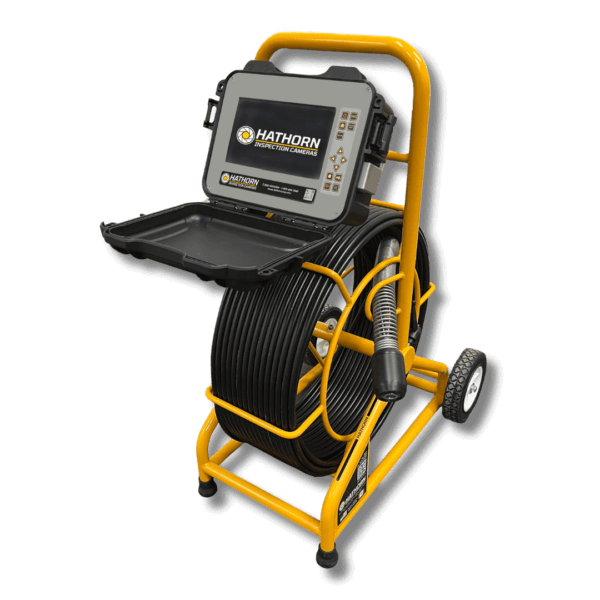
Mainline CCTV inspection systems are the workhorses of the pipeline inspection industry, providing high-definition visual assessment of sewer mains, stormwater pipelines, and industrial process lines across the full range of pipe diameters encountered in municipal and industrial infrastructure networks. A mainline inspection crawler carries a forward-facing and pan-and-tilt camera through the pipeline, transmitting live high-definition video back to the surface control unit while the operator navigates the system and records observations against pipeline chainage data. The quality and reliability of the mainline system directly determines the quality of the condition data that underpins every rehabilitation and maintenance decision made from the inspection results.
Our mainline CCTV crawler range covers pipe diameters from 100mm through to 1200mm and beyond using appropriately sized wheeled crawler platforms matched to the pipe diameter being inspected. Crawler wheel configurations are interchangeable to accommodate different pipe sizes and shapes including circular, ovoid, egg-shaped, and box culvert profiles commonly found in older Australian infrastructure networks. This flexibility means a single mainline rig can serve the full range of pipe diameters a contractor or council drainage crew encounters in day-to-day inspection operations without requiring a separate system for each pipe size category.
Camera Systems
High-definition camera systems with optical zoom capability allow operators to identify and document pipeline defects with the precision needed to support accurate condition grading under WSAA and international pipeline condition assessment coding standards. Pan-and-tilt camera heads with full 360-degree rotation allow operators to examine the full internal circumference of a pipeline at any point along its length, ensuring that defects on the pipe crown, invert, and springline are all captured clearly in the inspection record. Modern HD mainline cameras deliver image quality that makes defect identification more reliable, reduces re-inspection rates, and supports defensible condition grading outcomes.
Crawler Tractor Units
Crawler tractor units in our mainline range are engineered for durability in the harsh conditions of live sewer inspection, with sealed drive motors, corrosion-resistant chassis materials, and cable management systems designed to handle the abrasion and chemical exposure of regular sewer pipeline operation. Powerful tractor drive systems maintain consistent crawler speed and traction in partially filled pipelines, on sloping inverts, and against moderate flow conditions that would cause less capable systems to stall or require pipeline bypass. Reliable crawler traction is fundamental to inspection productivity because a stalled crawler in a live sewer main costs far more in recovery time than the upfront investment in a properly specified tractor unit.
Surface Control Units
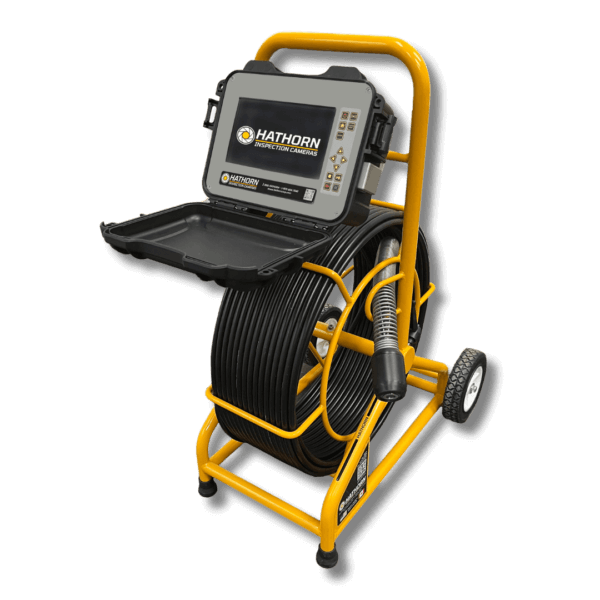
Surface control units integrate camera control, lighting adjustment, crawler drive control, distance measurement, and video recording into a single operator interface that can be configured for van-mounted or portable deployment depending on the operational requirements of the inspection crew. Modern control units incorporate touchscreen interfaces, real-time defect coding keyboards, and direct integration with inspection software running on the same unit or on a connected laptop, streamlining the data capture workflow and reducing the manual data entry required after each inspection run. DP units are designed for field durability with sealed connectors, reinforced housings, and displays readable in direct sunlight.
Cable, Reel & Lighting Systems
Cable and reel systems for mainline inspection must be matched to the maximum inspection distance required in typical operations, with reel capacities ranging from 60 metres for short-run residential main inspections to 300 metres or more for long mainline trunk sewer inspections between manholes. Cable quality is critical because the camera cable transmits both power to the crawler and video signal from the camera back to the surface, and cable degradation is one of the most common causes of image quality problems and system reliability issues in the field. We supply mainline inspection cable specifically rated for the chemical and mechanical demands of sewer pipeline inspection, not repurposed cable from other applications.
Lighting systems on mainline CCTV cameras have advanced dramatically with the adoption of high-output LED technology that delivers consistent, even illumination across the full pipe diameter without the heat generation, fragility, and limited lifespan of older halogen lamp systems. Adjustable LED lighting intensity allows operators to optimise illumination for different pipe diameters and surface conditions, ensuring detail is captured clearly on both highly reflective and heavily encrusted pipe surfaces. Our mainline camera systems include LED lighting configurations calibrated for the specific camera sensor and lens combination to deliver optimal image quality under the widest possible range of pipe interior conditions.
2. Lateral Launch CCTV Inspection Systems
Lateral launch CCTV inspection systems extend the inspection capability of a mainline crawler by enabling the camera to navigate from the main sewer pipe into connected property service laterals without requiring a separate access point at the property boundary. This capability is enormously valuable for municipal sewer operators who need to assess the condition of service lateral connections as part of a broader sewer system condition assessment program, because the traditional alternative of accessing each lateral from the property end is time-consuming, disruptive, and expensive. Lateral launch technology transforms a single mainline inspection deployment into a comprehensive assessment of both the main pipe and all connected laterals.
The lateral launch mechanism is mounted on the mainline crawler tractor and carries a small-diameter push-rod camera that is deployed into the lateral pipe opening when the crawler is positioned at the junction. Once the lateral camera is launched, it travels up the service pipe under operator control, transmitting live video back to the surface as it goes, until it reaches the extent of its push-rod length or encounters an obstruction. The mainline crawler then retrieves the lateral camera and continues along the main pipe to the next lateral junction, allowing all laterals in a section of main to be inspected in a single pass without pulling the mainline system back to the surface.
Camera Heads & Push-Rod Length
Lateral launch camera heads are designed for the smaller diameter range of service laterals, typically 75mm to 150mm, with appropriately sized pan-and-tilt camera heads that deliver clear imagery within the confined internal diameter of residential and commercial connection pipes. Defect identification in service laterals is critical for identifying sources of infiltration, exfiltration, root intrusion, and structural defects that affect both property drainage performance and the broader sewer system's hydraulic capacity. High-quality lateral imagery captured from a launched camera system supports accurate defect coding and condition grading under the same inspection standards applied to mainline pipe assessments.
Push-rod length for lateral launch systems determines how far up a service lateral the camera can travel from the mainline junction, with standard systems typically reaching 15 to 30 metres which is sufficient to cover the full length of most residential service connections from the main to the property boundary. Extended push-rod configurations are available for longer lateral runs or for commercial properties where the connection pipe runs a greater distance before reaching an accessible cleanout or property drain. We advise customers on the appropriate push-rod specification based on the typical service lateral lengths in their network and the proportion of longer laterals they expect to encounter in their inspection program.
Integration with Mainline Control Units
Integration between the lateral launch system and the mainline inspection control unit is an important operational consideration because operators need to manage both camera streams, distance measurement, and defect coding for both the main pipe and the lateral within the same inspection workflow. Our lateral launch systems integrate directly with leading inspection software platforms to enable lateral inspection data to be captured and coded as a sub-record of the parent mainline inspection, maintaining the correct spatial relationship between mainline and lateral condition data in the inspection database. This integrated data capture approach eliminates the double-handling that occurs when mainline and lateral inspection records are created separately and linked manually.
Mainline crawler platforms used as the carrier vehicle for lateral launch systems must have sufficient tractor power, cable capacity, and structural provisions to accommodate the additional weight and drag of the lateral launch mechanism without compromising their performance during the mainline inspection runs between lateral deployments. We match lateral launch mechanism specifications to compatible mainline crawler platforms to ensure the combined system performs reliably across the full range of operating conditions encountered in live sewer inspection. Customers purchasing a lateral launch capability for the first time receive a compatibility assessment that confirms whether their existing mainline crawler is suitable as a carrier vehicle or whether a new crawler platform is required.
3. CCTV Inspection Software
CCTV inspection software is the platform on which all the visual data captured by a pipeline inspection system is organised, coded, stored, reported, and ultimately transformed into the condition intelligence that drives maintenance and rehabilitation decision-making. Choosing the right inspection software is just as important as choosing the right camera system because even the best video footage delivers limited value if it cannot be efficiently coded, accurately reported, and integrated with the asset management systems where rehabilitation decisions are made. We supply and support leading inspection software platforms used across Australian water authorities, councils, and drainage contractors.
Defect Coding & Standards
Defect coding within CCTV inspection software follows established pipeline condition assessment standards including the Water Services Association of Australia pipeline condition grading system and internationally recognised standards such as PACP and MACP used by contractors working across multiple jurisdictions. Software platforms that enforce consistent coding methodology reduce operator-to-operator variability in defect grading, improve the reliability of condition scores used in rehabilitation prioritisation models, and ensure inspection data meets the quality standards required by asset owner clients. We configure inspection software deployments to reflect the specific coding standard and terminology used by each customer's organisation or their client base.
Video Management & AI-Assisted Detection
Video recording and management capabilities within modern inspection software handle the full workflow from real-time recording during inspection through to video compression, file naming, and archiving against the pipeline asset record. High-definition video files are large, and an active inspection program generates significant data volumes that must be managed efficiently to prevent storage costs from becoming a burden and to ensure footage remains accessible and retrievable over the long term. Our supported software platforms include efficient video compression and storage management tools that balance image quality retention against practical storage requirements for high-volume inspection programs.
Automated defect detection using artificial intelligence and machine learning algorithms is an emerging capability in advanced inspection software platforms that assists operators in identifying and coding pipeline defects by flagging potential defect locations in recorded video for operator review and confirmation. AI-assisted defect detection does not replace trained operator judgment but significantly reduces the time required to review long inspection runs and improves consistency by ensuring potential defects are flagged for review rather than potentially overlooked during fatigue-affected manual review. We offer AI-assisted inspection software options for customers whose inspection volumes and accuracy requirements make the investment in this technology worthwhile.
Reporting & Database Management
Reporting tools within CCTV inspection software generate the structured condition reports, defect schedules, and photographic documentation packages that contractors deliver to asset owner clients as the primary deliverable of a pipeline inspection program. Configurable report templates allow inspection companies to produce reports that match the format and content requirements of different client organisations without manual reformatting of data after each inspection run. Professional, well-structured reports delivered promptly are a key differentiator for inspection contractors competing for municipal and utility pipeline inspection contracts.
Database management and data quality tools within inspection software platforms manage the growing archive of pipeline inspection records accumulated over years of inspection program activity, providing tools for data validation, duplicate detection, record linking, and condition trend analysis across repeated inspections of the same pipeline assets. The longitudinal value of a pipeline condition database grows significantly over time as repeated inspection cycles build a picture of how individual pipeline assets are deteriorating, supporting increasingly accurate prediction of remaining asset life. Software training and ongoing support are integral parts of the inspection software supply we provide.
4. Asset Management Integration
Asset management integration connects CCTV pipeline inspection data with the broader infrastructure asset management systems used by water authorities, councils, and utilities to plan, budget, and manage their pipeline rehabilitation and maintenance programs. Inspection condition data that exists in isolation within an inspection software database delivers only a fraction of its potential value compared to the same data integrated with GIS systems, asset registers, work order management platforms, and financial planning tools that asset managers use to make rehabilitation investment decisions. We work with customers to establish data flows that move inspection results from the field into the asset management systems where they drive real decisions.
GIS Integration
GIS integration is typically the first and most impactful asset management connection for pipeline inspection data, linking condition assessment results to the spatial representation of each pipeline asset in the organisation's geographic information system. When condition scores, defect locations, and inspection dates are visible in the GIS alongside pipe age, material, diameter, and catchment data, asset managers gain the multi-dimensional view of their network they need to identify rehabilitation priorities and plan intervention programs efficiently. We support integration between leading inspection software platforms and the major GIS systems used across Australian water and drainage authorities including Esri ArcGIS and QGIS.
Rehabilitation Prioritisation & Work Order Management
Rehabilitation prioritisation modelling uses integrated inspection condition data alongside pipe age, failure history, consequence of failure assessments, and hydraulic performance data to rank pipeline assets by their relative need for rehabilitation investment. Asset managers who rely on inspection condition data alone to prioritise rehabilitation miss the full picture of which assets represent the greatest risk to service continuity and which interventions will deliver the greatest return on investment. We assist customers in configuring prioritisation models within their asset management platforms that incorporate CCTV condition data as one input within a comprehensive multi-criteria assessment framework.
Work order management integration closes the loop between condition assessment and maintenance response by automatically generating work orders in the organisation's maintenance management system when inspection results trigger predefined condition thresholds or identify defects requiring immediate attention. This automation removes the manual step of translating inspection findings into maintenance tasks, reduces the risk of urgent defects being missed in a manual review process, and creates a documented audit trail linking every maintenance response back to the inspection finding that triggered it. We configure work order integration for customers using major CMMS platforms including Maximo, TechnologyOne, and Infor.
Financial Planning & Business Intelligence
Financial planning integration connects rehabilitation volume forecasts derived from inspection condition data with the capital planning and budget allocation processes of the asset owner organisation. When inspection programs systematically accumulate condition data that can be aggregated into network-level rehabilitation forecasts, asset managers can present defensible, data-driven capital expenditure projections to finance and governance stakeholders rather than relying on engineering judgment and historical spending patterns alone. We assist water authorities and councils in structuring their inspection data and condition assessment outputs to feed directly into long-term financial planning models.
Reporting and business intelligence tools that draw on integrated pipeline condition and asset management data give executive and governance stakeholders the network-level performance indicators and investment efficiency metrics they need to oversee pipeline asset management programs effectively. Dashboard reporting that shows rehabilitation program progress, condition trend trajectories, and budget utilisation against plan transforms the raw data of individual inspection records into the strategic intelligence that informs infrastructure investment decisions at the organisational level.
5. Large Diameter Pipe Inspection
Large diameter pipeline inspection presents a distinct set of technical and operational challenges compared to standard mainline inspection, requiring specialised equipment, operating procedures, and safety protocols appropriate for the confined space entry and complex access conditions that characterise trunk sewer mains, large stormwater culverts, pressure mains, and industrial process pipelines in the 900mm to 3000mm and beyond diameter range. Standard CCTV crawler systems designed for smaller diameter pipes are simply not adequate for large diameter inspection, lacking the lighting power, camera resolution, physical size, and structural capability needed to inspect large pipe interiors effectively. Our large diameter inspection systems are purpose-built for this demanding application.
Large Diameter Crawler Platforms
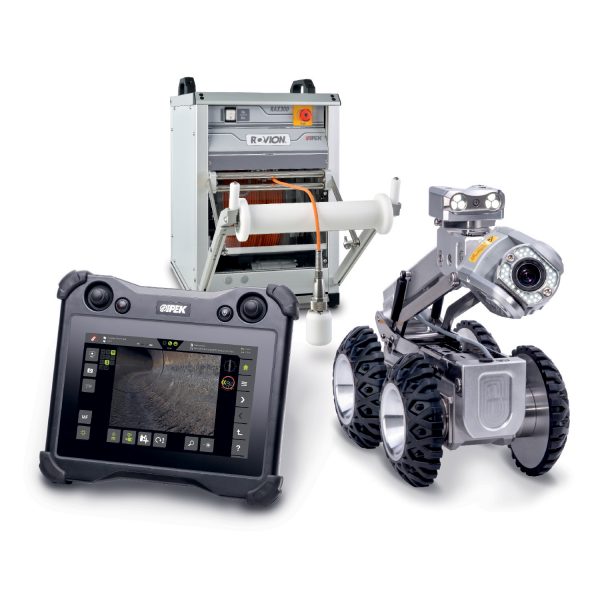
Large diameter crawler platforms for pipes in the 600mm to 1500mm range use heavy-duty wheeled tractor units with extended wheel bases, high-output LED lighting arrays, and high-resolution pan-and-tilt camera heads capable of capturing detailed imagery across the full internal diameter of a large pipe without the light fall-off and image distortion that afflicts smaller camera systems operating in oversized spaces. These crawler platforms are substantially larger and heavier than standard mainline inspection equipment and require appropriate surface handling equipment and manhole access provisions to deploy safely and efficiently. We advise customers on the access infrastructure requirements for large diameter crawler deployments as part of the equipment specification process.
Zoom Sonar & Laser Profiling
Zoom sonar inspection systems provide an important complementary inspection technology for large diameter pipelines that are partially or fully flooded and cannot be dewatered for visual CCTV inspection. Sonar scanning systems generate detailed cross-sectional profiles of the pipe interior that reveal sedimentation accumulation, structural deformation, and internal lining condition even through opaque water that would block any optical camera system. Combining sonar and CCTV inspection data provides a comprehensive condition picture of large diameter infrastructure assets regardless of the flow conditions present during the inspection.
Pipe profiling and deformation measurement within large diameter pipelines requires inspection systems capable of generating quantitative geometric data about the pipe's current cross-sectional shape, not just qualitative visual imagery. Laser profiling systems mounted on large diameter inspection crawlers generate precise measurements of pipe internal diameter, ovality, and deformation that are essential for assessing the structural condition of flexible pipeline materials and for verifying that internal lining installations have been completed within specified dimensional tolerances. We supply laser profiling capability as an integrated component of large diameter CCTV inspection systems for customers with quantitative deformation assessment requirements.
Man-Entry Inspection & Safety Management
Man-entry inspection remains the method of last resort for large diameter pipelines that exceed the practical operating range of remotely operated inspection systems and where access and safety conditions permit entry by trained confined space workers. Man-entry inspection allows direct visual and tactile assessment of pipeline condition including lining integrity, joint condition, and structural defect severity that remote camera systems may characterise less precisely. Where man-entry inspection is required, we supply the documentation, lighting, communication, and gas monitoring equipment needed to conduct confined space entry inspection safely and in compliance with Work Health and Safety legislation across all Australian states and territories.
Safety management for large diameter pipeline inspection operations is a significant operational consideration that extends beyond the inspection equipment itself to encompass confined space entry procedures, atmospheric monitoring, emergency retrieval planning, and the communication systems needed to maintain contact between surface personnel and any crew members working in or near a large pipe access structure. Our large diameter inspection systems are supplied with the safety accessories and procedural documentation needed to conduct inspections in compliance with Australian confined space entry regulations. Our large diameter inspection capability extends to custom solutions for unusually shaped culverts, box structures, arch pipes, and other non-circular infrastructure that requires specialised crawler geometry or camera mounting arrangements to inspect effectively.
6. Custom CCTV Inspection Solutions
Custom CCTV pipeline inspection solutions address the inspection challenges that fall outside the scope of standard product configurations, arising from unusual pipe geometries, extreme operating environments, remote or difficult access locations, hazardous process pipelines, or highly specific data capture requirements that off-the-shelf systems cannot fully satisfy. The pipeline inspection industry encompasses an enormous diversity of infrastructure types, operating conditions, and regulatory environments, and a supplier with genuine technical depth recognises that standard catalog products meet the majority of inspection requirements but not all of them. Our engineering team has decades of experience developing custom solutions for customers whose inspection challenges demand something beyond the standard offering.
Custom Crawler Chassis Designs
Custom crawler chassis designs extend the operational range of CCTV inspection into pipe diameters, shapes, and configurations that standard wheel-based tractor platforms cannot access reliably. Tracked crawler designs provide superior traction in heavily sedimented or irregular-surface pipelines where wheeled platforms struggle to maintain consistent forward progress. Amphibious crawler platforms are available for pipelines that transition between dry and submerged sections, maintaining inspection continuity through the full length of an asset without requiring separate dry and submerged inspection deployments.
Hazardous Area & High-Temperature Systems
Hazardous area inspection systems are a specialised custom solution requirement for process pipelines in chemical plants, refineries, gas processing facilities, and mining operations where the pipeline contents or surrounding atmosphere create explosion risk that prohibits the use of standard electrical inspection equipment. Intrinsically safe CCTV inspection systems are designed and certified to operate safely in ATEX and IECEx classified hazardous zones, using current-limiting and energy-restricting circuit designs that prevent any ignition risk from the inspection equipment itself. We supply intrinsically safe pipeline inspection solutions for customers whose operations require compliance with Australian hazardous area electrical installation standards.
High-temperature inspection solutions are required for process pipelines in industrial facilities where internal pipe temperatures exceed the operating range of standard CCTV camera and crawler systems. Thermally protected camera housings, high-temperature cable insulation, and crawler components rated for elevated temperature environments extend inspection capability into hot process pipelines that standard equipment cannot enter without damage. We work with customers in steel production, mining processing, and chemical manufacturing to specify high-temperature inspection solutions appropriate for their specific process pipeline temperature conditions.
Remote, Subsea & Multi-Sensor Platforms
Remote and subsea pipeline inspection requirements arise in offshore facilities, river crossings, coastal infrastructure, and remote mining or resource extraction locations where standard land-based inspection deployment logistics are not applicable. Remotely operated vehicle platforms adapted for pipeline inspection in submerged or remote environments provide inspection capability for infrastructure that would otherwise be inaccessible to visual condition assessment without prohibitively expensive dewatering or excavation. Our engineering team assesses remote and subsea inspection requirements on a case-by-case basis and develops solution proposals in collaboration with the customer's operations and engineering teams.
Integration of non-visual inspection technologies alongside CCTV imaging is an increasingly common custom solution requirement as pipeline asset managers seek more comprehensive condition data than optical imagery alone can provide. Ground-penetrating radar for external pipe wall assessment, laser profiling for geometric measurement, and acoustic emission monitoring for active defect detection are all technologies that can be combined with CCTV camera systems on a custom integrated inspection platform. We have experience designing multi-sensor inspection payloads and integrating their data outputs into inspection software and asset management platforms for customers with advanced condition assessment requirements.
The custom solution process begins with a detailed technical briefing where our engineering team works with the customer to understand the inspection challenge, the physical and environmental constraints of the pipeline and access environment, the data outputs required, and the budget and timeline parameters within which a solution needs to be delivered. This collaborative discovery process ensures that custom solution proposals are grounded in a thorough understanding of what is genuinely needed rather than what is technically interesting to engineer. Customers who have brought challenging inspection requirements to our team consistently find that a solution exists or can be developed, and that the investment in a custom solution is justified by the inspection data quality and operational efficiency it delivers.
7. Training & Certification
Pipeline inspection training and certification is a professional investment that directly determines the quality of the condition data produced by a CCTV inspection program, the safety of the personnel conducting inspections, and the credibility of the inspection organisation's outputs with asset owner clients. A technically advanced CCTV inspection system operated by an inadequately trained crew produces condition data that is less reliable, less complete, and less defensible than the same system operated by a well-trained and certified inspection team. We offer a comprehensive range of training programs designed to build competency at every level of the pipeline inspection profession, from entry-level field operators through to senior condition assessment practitioners and program managers.
Equipment Operation Training
Equipment operation training covers the safe and effective deployment, operation, and maintenance of every CCTV inspection system we supply, ensuring that operators can get maximum performance from their equipment while avoiding the handling errors and maintenance neglect that cause premature equipment failure and costly repairs. Training is conducted by experienced practitioners who have operated the equipment in real pipeline inspection environments, not just in a classroom or laboratory, and who can share the practical field knowledge that transforms theoretical understanding into genuine operational competence. Equipment training is available at our facilities, at customer sites, or in a combined format that begins with foundational classroom instruction and continues with supervised field deployment on live inspection projects.
Pipeline Condition Assessment Coding
Pipeline condition assessment coding training develops operator competency in the systematic identification, classification, and coding of pipeline defects using the WSAA pipeline condition grading standard and other relevant assessment frameworks used across the Australian water and drainage industry. Consistent, accurate defect coding is the foundation of reliable condition data, and operators who have received structured coding training produce more consistent and accurate results than those who have learned coding informally or by reference to documentation alone. Our coding training programs include practical exercises using real inspection video from a diverse range of pipe materials, diameters, and defect types to build coding proficiency across the full range of conditions operators encounter in the field.
Confined Space Entry Training
Confined space entry training is a mandatory safety competency for pipeline inspection personnel who access sewer manholes, stormwater pit structures, and other confined spaces that meet the regulatory definition under Australian Work Health and Safety legislation. Our confined space training programs meet the requirements of the relevant state and territory WHS regulations and cover atmospheric hazard identification, gas monitoring procedures, entry permit systems, emergency retrieval procedures, and the use of personal protective equipment appropriate for sewer and stormwater confined space entry. Personnel who complete our confined space training program are equipped with the knowledge and practical skills to manage confined space entry risks on pipeline inspection operations safely and in full regulatory compliance.
Software Training, Supervisor QA & CPD
Inspection software training is available for all software platforms we supply, covering the complete operational workflow from project setup and field data capture through to defect coding, reporting, database management, and data export. Software training is tailored to the specific roles of the participants, with field operator training focused on the data capture and real-time coding workflow and office-based training covering the reporting, quality assurance, and data management functions used by inspection supervisors and data managers. We offer both initial training for new software installations and refresher training for existing users who want to improve their proficiency or learn new features introduced in software updates.
CCTV inspection supervisor and quality assurance training develops the competencies needed by inspection team leaders and quality managers to review field inspection data, assess coding accuracy and completeness, manage re-inspection workflows, and deliver condition reports that meet the quality standards required by municipal and utility pipeline asset owners. Continuing professional development through our training program keeps inspection practitioners current with evolving inspection standards, new coding requirements, advances in inspection technology, and changes in the regulatory and safety frameworks governing pipeline inspection work across Australia. Customised training programs are available for organisations with specific training needs that our standard curriculum does not fully address.